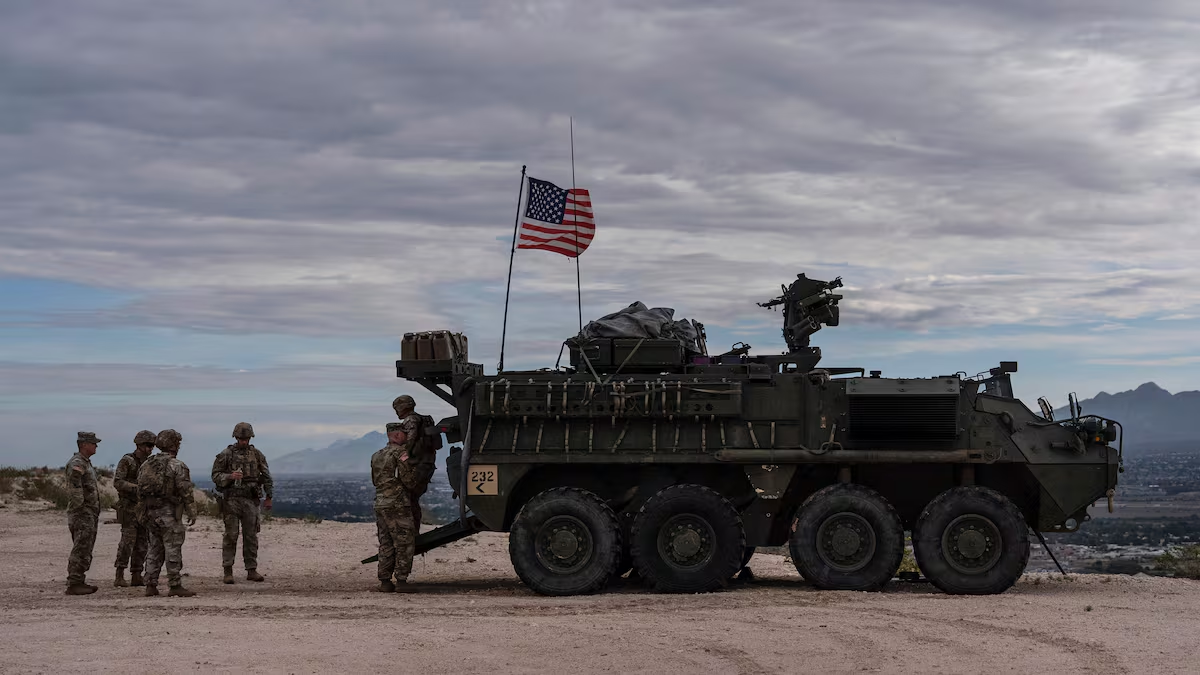

Since June, and without much fanfare, dozens of National Guard soldiers in Albuquerque, the capital and largest city of New Mexico, have been listening to police communications, monitoring traffic cameras, and helping secure crime scene perimeters. These are not the typical duties of a military force designed as a locally deployable contingent, usually used to support natural disasters or emergency situations, but they are responding to an explicit request from the local police.
At the same time, in Washington, D.C., the presence of National Guard troops ordered by President Donald Trump last week to address an alleged crime crisis has drawn strong criticism from the Democratic opposition as well as protests from the city’s residents.
The deployment of 60 to 70 personnel in Albuquerque was originally requested in April by the city police, who, in an emergency petition, cited the “fentanyl epidemic and rising youth violence” as critical problems requiring immediate intervention. Democratic Governor Michelle Lujan Grisham approved the request, and a week ago, just as the National Guard arrived in Washington, she signed a declaration of a state of emergency for the northern part of the state, allowing her to mobilize more troops there if necessary.
President Trump, on the other hand, ordered 800 National Guard troops to Washington, D.C. without any prior request from local authorities, citing the oft-repeated security crisis that is not backed by statistics. In response to this troop mobilization and the attempt to take direct control of the local Washington police, Democrats nationwide denounced what they consider an illegal and dangerous use of the troops. Similar criticism arose when Trump sent thousands of National Guard personnel to California in June during protests against his immigration agenda.